

Planning for a Safe Season – What Parents and Coaches Can Do to Be Prepared – Sports Medicine

Planning for a Safe Season – What Parents and Coaches Can Do to Be Prepared – Sports Medicine

The to-do lists for coaches and sports administrators are very long in the fall. It’s time to meet new players, evaluate the condition and skills of each player, inform the parents of rules and schedules, and get the playbook finalized. What may get overlooked is the emergency plan and training.

Shane M. Miller, M.D., FAAP, sports medicine physician and the Section Director of Medical Sports Medicine at Scottish Rite for Children, has tips for parents and coaches, stemming from his background as a firefighter and EMT. These suggestions are compiled from his years of experience, as well as the evidence that continues to develop in the fields of trauma and sports medicine.

Parents

  • Take the preseason physical process seriously. With an accurate and thorough history and exam, the family doctor can identify conditions that may need special attention during the season.
  • Get to know the athletic trainer and emergency protocols. Not all leagues and schools have athletic trainers, but they should all have emergency protocols.
  • Ensure your child’s equipment fits correctly and is worn properly. Poorly fitting equipment misses the mark for protecting the child in the way it is designed. In some cases, this can even cause an injury.
  • Learn signs and symptoms of problems that put young athletes at risk. No one knows your child better than you do. Learn the signs and symptoms of a concussion, heat illness and overuse injuries. Taking the right steps when you recognize these can make all the difference for your athlete.
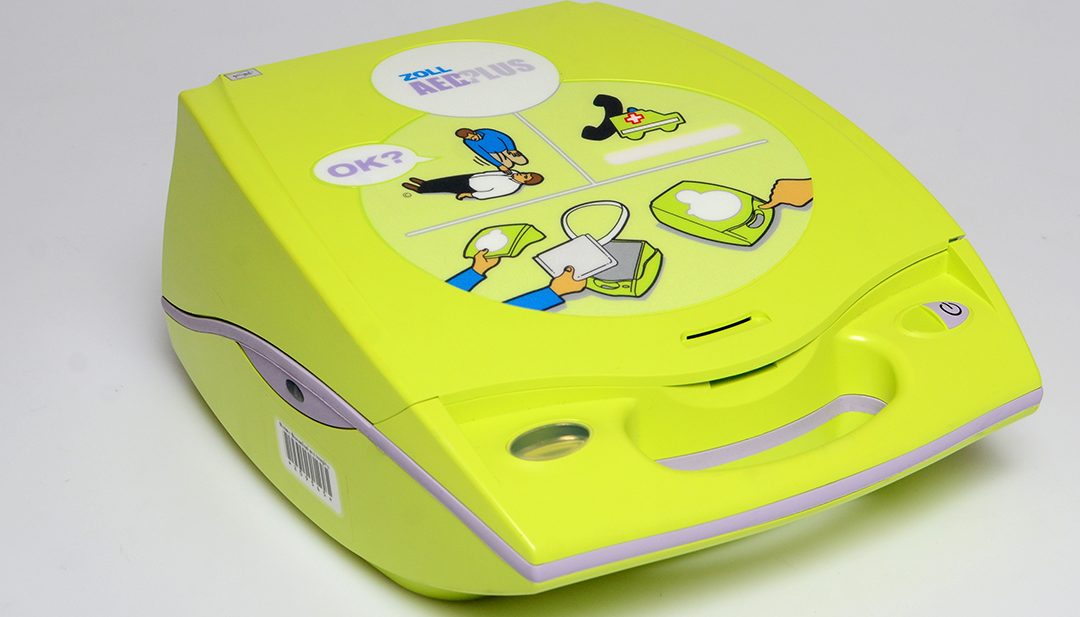
  • Check the condition of the field and access to emergency personnel. When arriving at practice or a competition, assess the conditions. Is the field in good condition? Is there an automatic external defibrillator (AED) present and accessible? Is there an ambulance or athletic trainer on-site or will 911 be used for emergencies?

Coaches and Athletic Trainers

  • Know your athletes’ major medical conditions and injuries. Because each athlete is unique, it has become more important to recognize individual needs. For example: For an athlete with exercise-induced asthma, an extra lap may cause serious problems. For someone with an overuse injury, ignoring activity restrictions can shorten his or her season rather than improve performance.
  • Review and practice critical decisions and emergency procedures. Establish a plan for making and communicating decisions about weather conditions from heat and humidity to lightning. Identify what resources are available for first aid at each event and how to respond in various emergencies. In many organizations, this is documented in a comprehensive Emergency Action Plan (EAP).

For more information about pediatric sports medicine and injury prevention, please visit our Sports Medicine page.
Does Your Child Complain of Heel Pain During or After Activity? – Sports Medicine

Does Your Child Complain of Heel Pain During or After Activity? – Sports Medicine

Growth plates in children’s bones are at risk of injuries because they are relatively weak and, in many cases, have ligaments or tendons attached nearby. Though some growth plates make bones grow longer, others give the bones unique shapes allowing them to do their jobs.

In the heel, the big tendon from the calf muscle, called the Achilles tendon, attaches to the back of the heel onto the calcaneus bone. In very young children, the bone is not yet grown, so the tendon is actually held onto the foot by the cartilage in the growth plate. Eventually, the bone grows, the growth plate closes, and there is a solid connection for the tendon.

Many children naturally become more involved in sports around 8-12 years old. When a young athlete runs or jumps, the Achilles tendon pulls repeatedly on the cartilage in the heel, causing it to become sore. For patients like Amelia, this can be painful. The impact on the ground with running and jumping can also cause this area to be irritated. Pain and inflammation in the growth plate of the heel is known as Sever’s Disease or calcaneal apophysitis. Symptoms may come and go for 1-2 years while a young athlete is growing quickly in the heel bone.

Shane M. Miller, M.D., tells us that it is safe to play sports as long as the athlete is not limping or complaining of significant pain, and that symptoms should improve with rest and ice, which allows these tissues to recover from the injury. Changing shoes or adding cushioned heel cups may be recommended. Other treatments are available and should be considered on an individual basis.

Here are some situations that increase a child’s risk of Sever’s Disease:

  • Year-round sports participation
  • Sudden increase in training intensity
  • Tournaments and summer camps
  • Running and jumping excessively
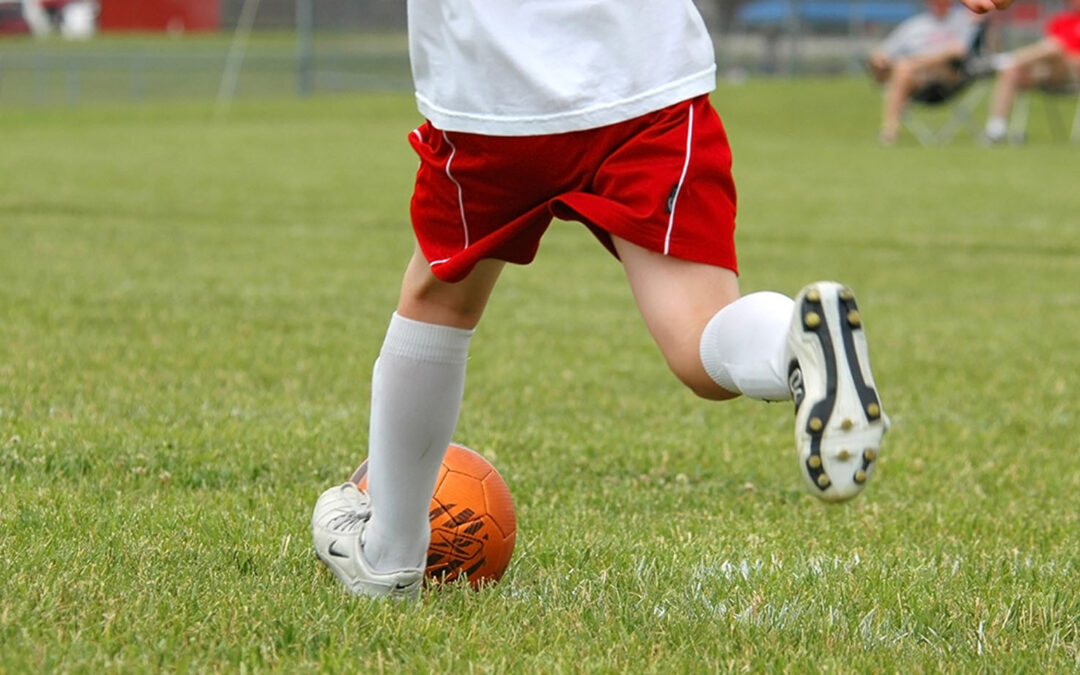
  • Sports that involve wearing cleats (such as baseball or soccer)
  • Going barefoot, or participating in barefoot sports (such as gymnastics)

Learn more about overuse injuries and pediatric sports medicine.

Back to the Basics – Sports Medicine

Back to the Basics – Sports Medicine

Young athletes are working hard to jump higher and run faster. Though strengthening and training programs can be very effective in improving performance, it might be time to get back to the basics of having fun. Did you know playing tag can improve agility, reaction time and hand-eye coordination? What if we went back in time and reminded our youth to get outside and goof off? Parents of young children recall the days of playing games like “kick the can” and “hide and seek” with neighborhood friends. We can all agree we’ve gotten away from that and need to make an attempt to go back. We’ve traded all of this free play for organized activities with complicated training and competition schedules. Sometimes, kids are even developing overuse injuries from too many practices or too much too soon. Dr. Shane Miller, sports medicine pediatrician, encourages today’s youth to find the balance in participating in both organized sports and free play. After all, a few good games of tag in the evenings just might be the ticket to a faster speed on the basketball court. Or, maybe, teaching dad some fancy footwork with a soccer ball in the yard might help that football player to be a little quicker on his feet.