What Are Animal-Assisted Interventions?
Animal-assisted interventions use specially trained animals to help your child cope with the physical and emotional challenges of treatment.
At Scottish Rite, we have two different types of animals:
- Facility dogs who work alongside our Certified Child Life Specialists to help your child meet certain care and treatment goals.
- Volunteer animals who provide connection, comfort and positive distraction when your child comes to our facilities.
Working with our facility dogs and interacting with volunteer animals can help:
- Create a sense of calm and connection
- Reduce stress, fear and anxiety
- Build resilience and coping abilities
- Increase confidence
Facility Dog Program
Our facility dogs work closely with their handlers. Our child life specialists may choose to incorporate a facility dog into different care settings to support specific goals during treatment.
Our facility dogs come from Canine Assistants and are taught to respond to emotional cues, helping children stay calm and engaged during medical experiences.
How Facility Dogs Support Care
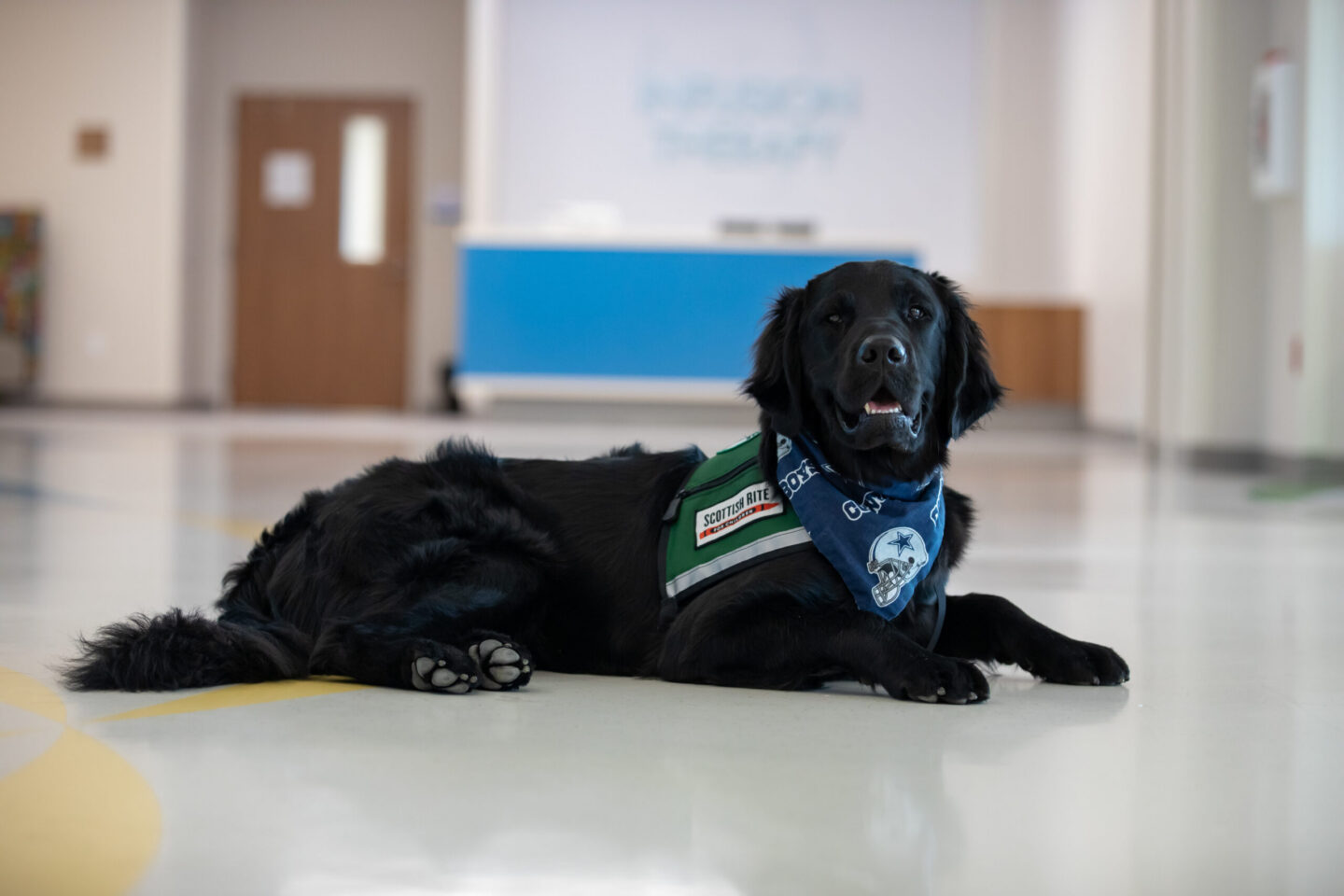
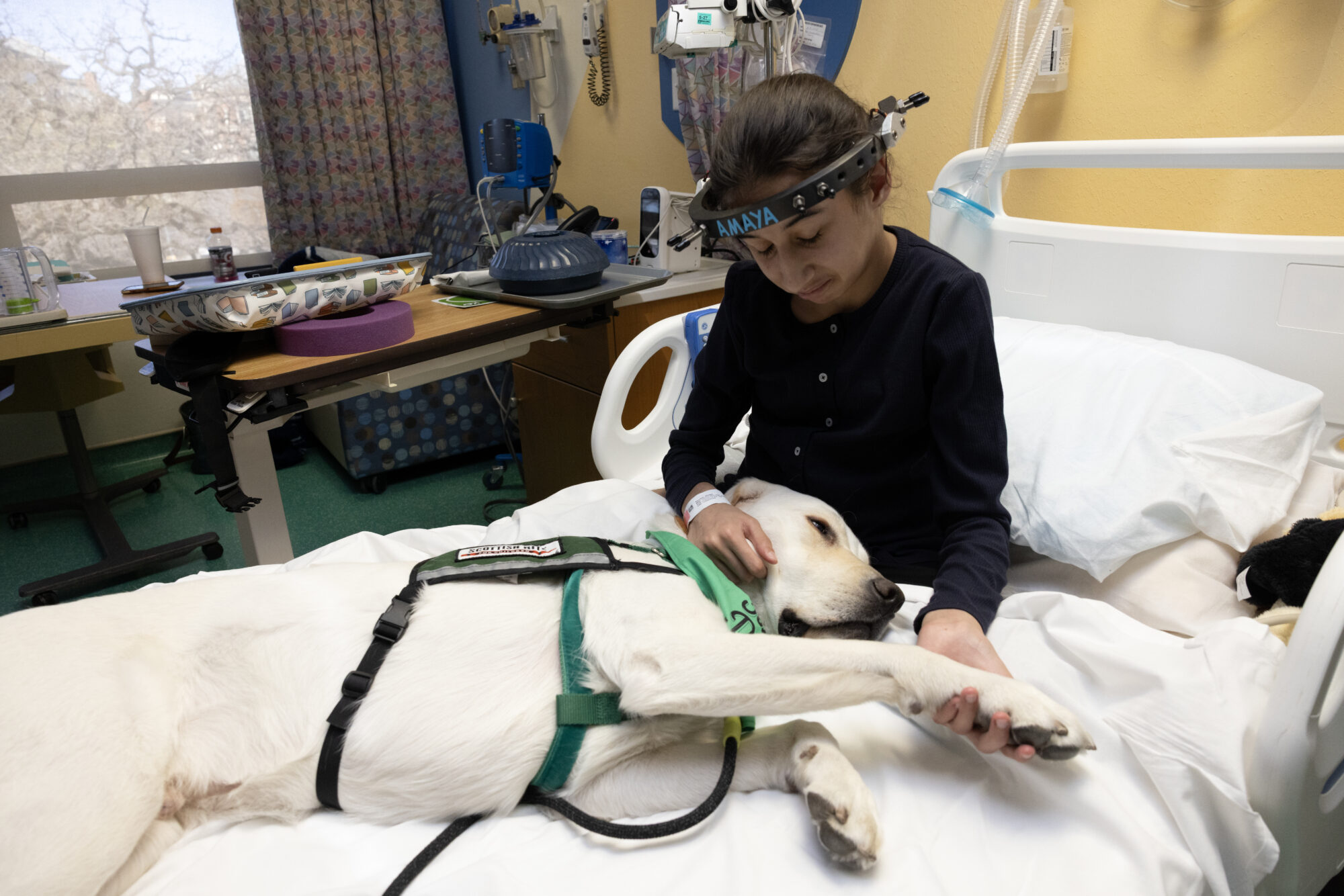
Facility dogs are utilized to help patients reach their treatment goals. Our child life specialists may include one of our facility dogs, Falco and Super, to help a patient:
- Prepare for surgery
- Stay calm during procedures, such as IV placement, infusion treatments or blood pressure checks
- Cope with pain and anxiety
- Feel more comfortable with medical equipment
- Build confidence during recovery after surgery
Depending on a child’s needs, our facility dogs may play an active role in care. This may include walking with a child after surgery to help with motivation and mobility.
Other times, child life specialists may use the facility dog to demonstrate medical equipment. Seeing the equipment on the dog can help a child feel less worried and more comfortable.
Volunteer Animal Program
Volunteer animals provide comfort and a positive distraction for children.
Unlike facility dogs, our volunteer animals are not involved in clinical care. Instead, your child may see our volunteer therapy dogs and cats within common areas like waiting rooms. Sometimes, they even visit our inpatient units on the Dallas campus.
These interactions with our volunteer animals often help children gain a sense of calm and connection in a medical environment.
-
Our facility dogs are raised and trained by a nonprofit organization called Canine Assistants.
They are trained from an early age to feel calm and comfortable in hospital environments. This includes exposure to medical equipment, noise and different care settings.
Facility dogs are trained to respond to emotional cues and work closely with their handlers, who are certified child life specialists, to support children during care.
-
Safety and comfort always come first. We assess every situation carefully before bringing an animal into a room. We always consider patients’ allergies, fears and past experiences with animals.
Our facility dogs and volunteer animals always stay with their trained handlers. They do not approach patients or families without guidance.
-
Not every patient will interact with a facility dog or volunteer animal during their visit. Animal-assisted interventions depend on your child’s needs, care setting and animal availability.
At Scottish Rite for Children Orthopedic and Sports Medicine Center in Frisco, patients may see Falco in the Day Surgery Center during the pre-op process. Interactions with Falco are not guaranteed and depend on patient needs and availability.
Volunteer therapy dogs may visit waiting rooms and other common areas. Some volunteer animals may also visit inpatient units at our Dallas campus.
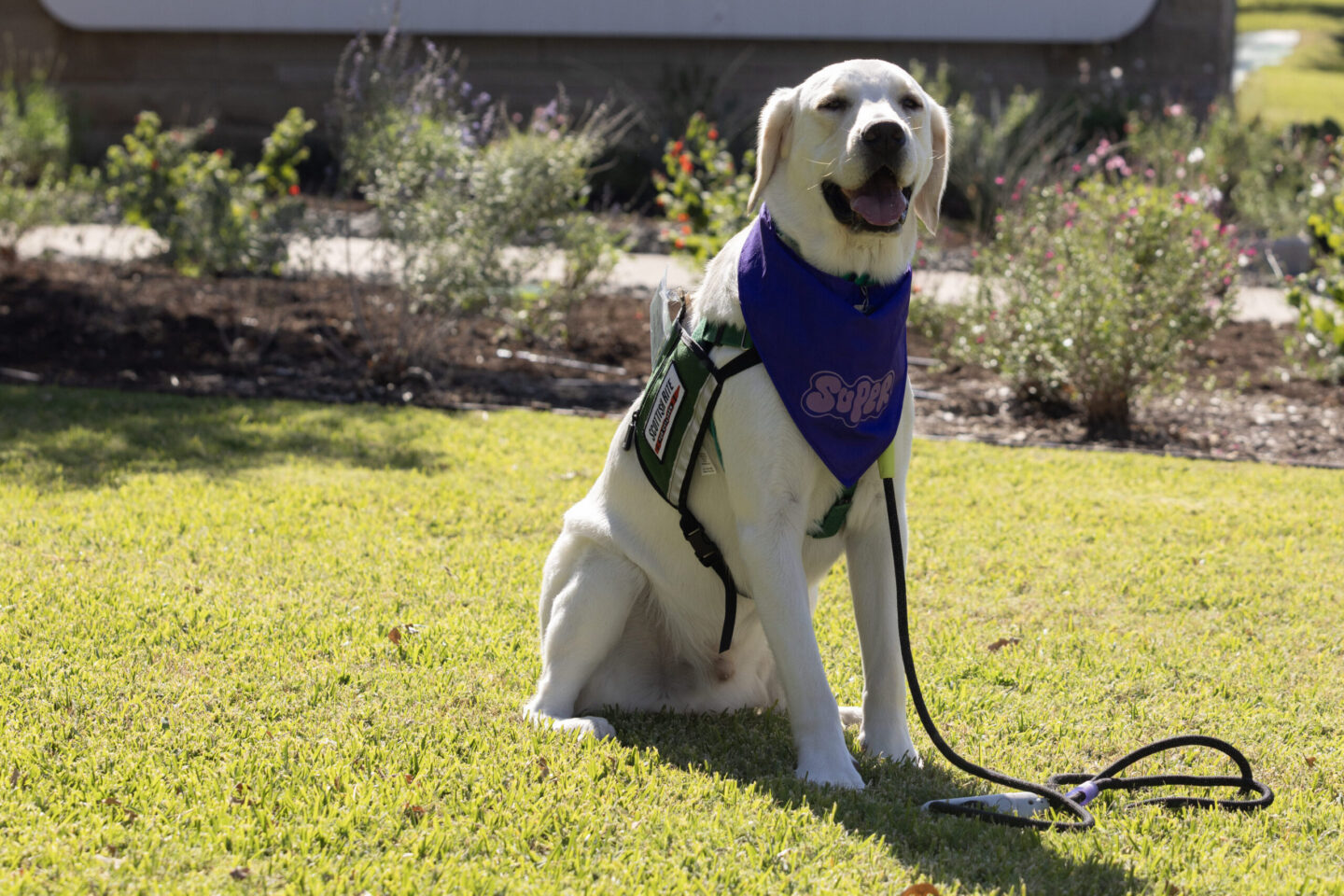
Super