What is Dyslexia?
Dyslexia is a learning difference that makes reading and spelling difficult. It typically appears as your child begins learning to read. With dyslexia, children may have trouble:
- Connecting letters with sounds
- Recognizing words
- Spelling accurately
- Reading fluently
Dyslexia has nothing to do with how smart or how hard your child works. They just process information in a way that makes reading harder.
Our Approach to Dyslexia
Learning to read can be difficult for many children, but it’s even harder for children who have dyslexia. This can make school more frustrating, difficult and exhausting, while also affecting their confidence.
If your child is experiencing challenges in school, a comprehensive evaluation can provide answers and a path forward. With appropriate diagnosis and a plan for intervention, your child can begin to overcome their academic obstacles.
At the Luke Waites Center for Dyslexia and Learning Disorders, our goals for your child’s care include:
- Helping you understand your child’s full learning profile
- Providing your family with clarity and directions for next steps
- Supporting academic development
- Reducing the emotional stress tied to dyslexia and academic struggles
If your child is experiencing any of these challenges, an evaluation can help provide you with answers and a plan for the best path forward.
What Causes Dyslexia?
Dyslexia often runs in families, which suggests a genetic component. It is brain-based and present from birth. However, it may not become noticeable until your child begins learning to read.
Some early red flags for dyslexia include:
- Family history of dyslexia or difficulty reading
- Early language or speech delays
- Difficulty with rhyming or sound-based word play
- Trouble learning letter names and sounds
Symptoms of Dyslexia
Dyslexia looks different at different ages:
- Younger children may have difficulty rhyming, learning the alphabet or recognizing high frequency words.
- Older children may struggle with sounding out words, reading in an accurate and fast manner, or spelling words correctly.
Overall, common characteristics of dyslexia can include difficulties with:
- Rhyming
- Recognizing syllables and sounds in words
- Learning letter names and sounds
- Sounding out (decoding) words
- Recognizing words
- Reading quickly and accurately
- Spelling accurately
Children who have dyslexia do not always have poor grades in school. However, they may find it difficult to keep up academically as reading and spelling become more difficult.
Evaluation at Scottish Rite
The Luke Waites Center for Dyslexia and Learning Disorders offers evaluations and recommendations for next steps.
To get started, you can start an application for evaluation online.Once you have requested the appointment, we will send you forms to complete. We will also ask you to have your child’s teacher complete a questionnaire. This will help us understand your child’s history before they arrive.
Your child’s in-person evaluation typically lasts about two and a half to three hours. Breaks are provided as needed. During the evaluation, we assess academic skills in the areas of reading, writing, spelling and math.
The evaluation takes the whole child into consideration. This may include assessing for cognition, social-emotional areas and AD/HD.
After the evaluation, we’ll schedule a virtual visit with your family to discuss your child’s findings and next steps. Our goal is to provide a turning point for your family, bringing clarity and relief after a period of uncertainty.
Treatment for Dyslexia
There is no cure for dyslexia, but your child can improve reading and spelling skills with appropriate interventions.
Our consultation-based center focuses on providing you with guidance and resources, including:
- Clear, actionable recommendations
- Connections to community or school-based services
- Advice and guidance to support your child’s journey
Evidence-based and Research-validated Dyslexia Interventions
Our team works closely with educators across the country to help children with dyslexia improve their academic performance.
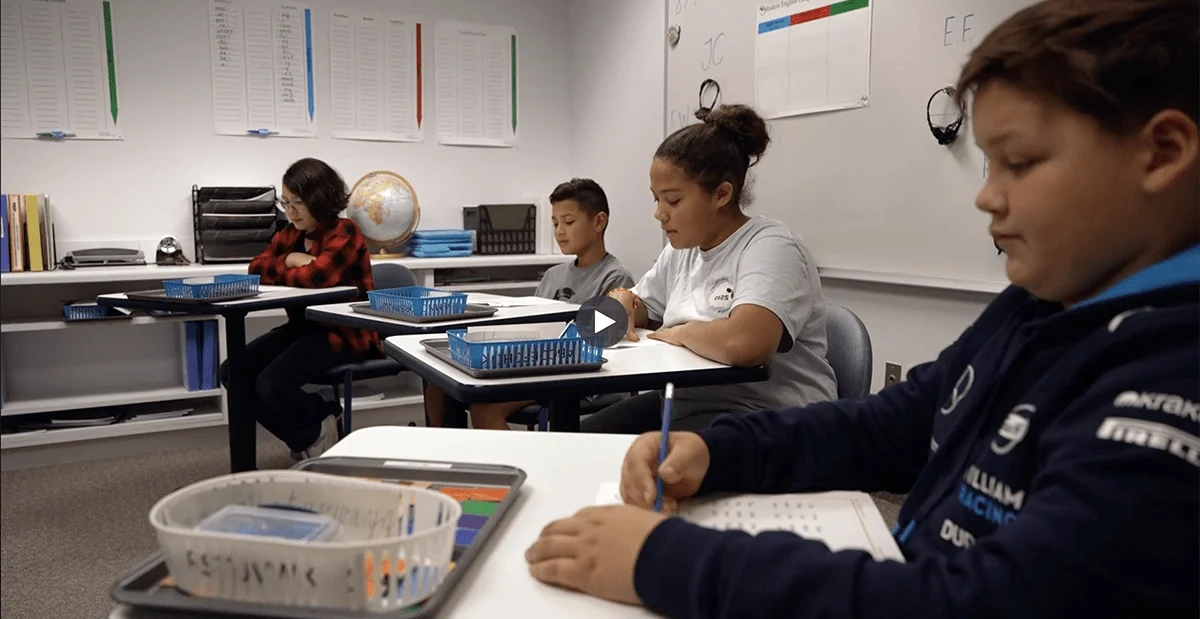
Our experts at the Luke Waites Center for Dyslexia and Learning Disorders developed research-based, research-validated curricula to help children with dyslexia learn to read confidently.
These programs have been used across the country for decades, helping thousands of children navigate the challenges of dyslexia. Children who participate in these programs consistently show faster progress, better results and long-term improvements.
Take Flight: A Comprehensive Intervention for Students with Dyslexia
- Industry-standard for small-group dyslexia education for children 7 and older
- Incorporates five scientifically proven components of effective reading instruction: phonemic awareness, phonics, fluency, vocabulary and reading comprehension
- Taught by certified Academic Language Therapists to ensure each child receives the level of attention and support they need to be successful at reading and writing
Bridges: A Dyslexia Intervention Connecting Teacher, Avatar and Student
- Designed for small-group dyslexia education for children 7 and older
- Incorporates five scientifically proven components of effective reading instruction: phonemic awareness, phonics, fluency, vocabulary and reading comprehension
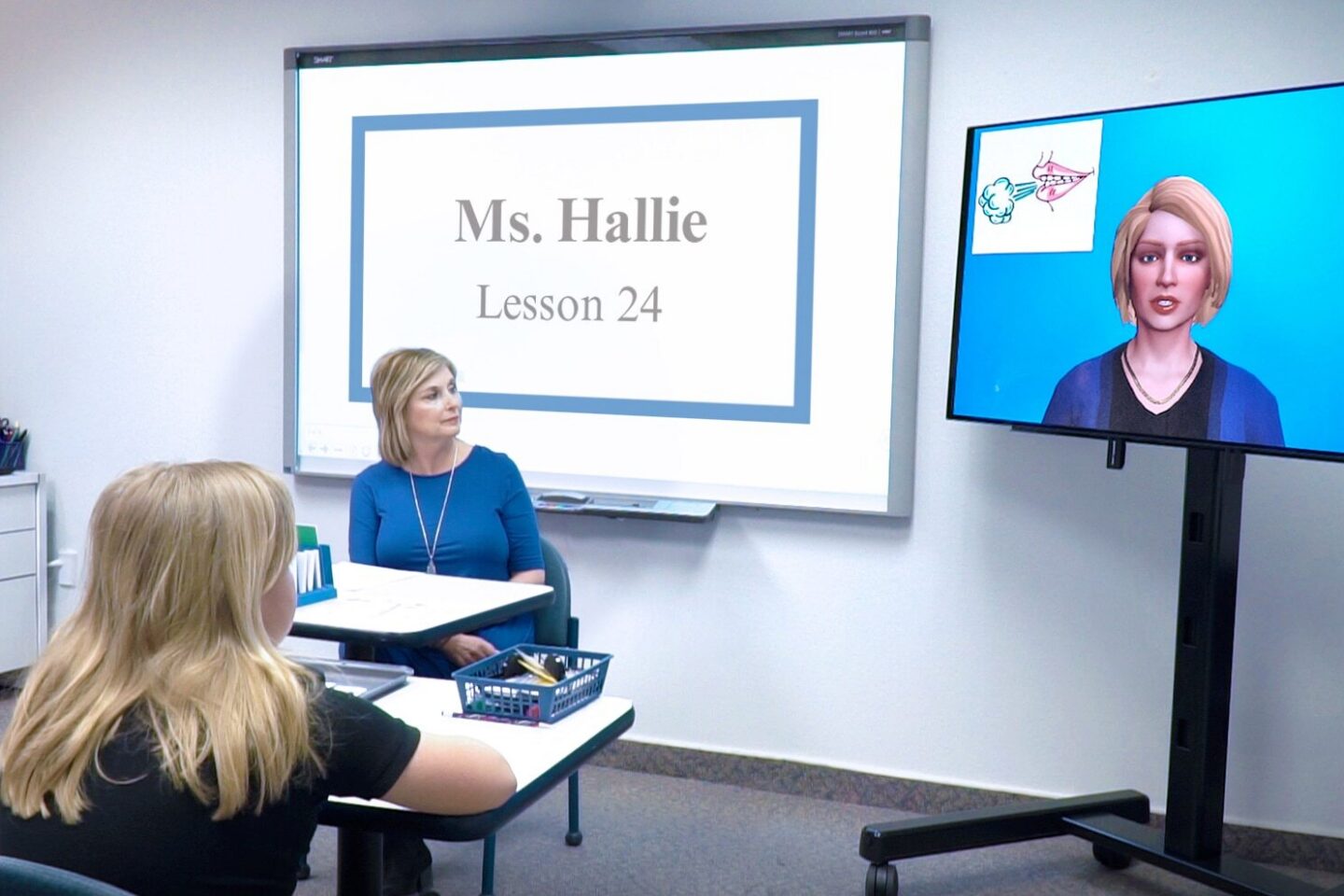
- Highly accessible, two-year program that uses technology and live instruction to deliver an engaging learning experience
- Certified classroom or special education teacher partners with a digital teacher, Ms. Hallie, to teach the curriculum
- The certified teacher provides a majority of the lesson, while Ms. Hallie, the digital teacher, co-teaches the more complex lesson components
- Program mirrors the Take Flight intervention
Build: A K-1 Early Reading Intervention
- A 100-lesson, small-group intervention that meets the specific needs of younger elementary school students struggling to read
- Builds key foundational reading skills in a manner tailored to young learners
- Addresses five key components of effective reading instruction for younger children: alphabet skills, letter/sound knowledge, phonological awareness, vocabulary and comprehension
Jet: A Fast-Paced Reading Intervention
- Comprehensive, small-group dyslexia intervention that can be completed in one school year
- Designed for students 14 and older
- Incorporates five scientifically proven components of effective reading instruction: phonemic awareness, phonics, fluency, vocabulary and reading comprehension
Turbo Start: A Dyslexia Curriculum for Newly Identified Students
- A nine-week program that provides a jump start for students of all ages who need comprehensive dyslexia intervention while awaiting placement in an intervention group

Why Choose Us?
Accurate, clinician-led diagnosis: Every child’s evaluation is discussed with and reviewed by a developmental pediatrician. We provide evaluation to understand your child’s learning needs. The end result is a plan with suggestions to help your child succeed.
National leader in dyslexia education: The Luke Waites Center for Dyslexia and Learning Disorders developed evidence-based, research-validated curricula that help children with dyslexia learn to read. Scottish Rite’s industry-leading Dyslexia program has changed the lives of thousands of children, from diagnosis to educational intervention and beyond.
Multidisciplinary expertise: Your child’s care team includes developmental pediatricians, educational diagnosticians, psychologists, speech-language pathologists, certified academic language therapists, instructors and social workers. We work together to understand your child’s needs and provide coordinated guidance.
-
No. Your child will not outgrow dyslexia. However, with appropriate diagnosis and intervention, they can successfully learn to read and spell.
-
No. Dyslexia does not reflect a lack of intelligence. However, since reading requires so much effort for them, your child may struggle with comprehension.
-
If you are mostly concerned about inattention, sadness, worry or negative behavior, please consult with your child’s primary care physician for evaluation to address these issues.
We do consider the impact of inattention, mood and negative behavior symptoms on learning during the evaluation.
-
We do not evaluate children whose learning difficulties are primarily related to:
- Autism spectrum disorders
- Low cognitive ability
- Hearing or vision impairment
- Attention problems
- Emotional problems
- Behavioral problems
- Lack of English proficiency
- Sensory integration disorder
- Auditory processing disorder
-
No, we do not offer evaluation for:
- Classroom and test accommodations
- Three-year re-evaluations for special education or private schools
- Gifted and talented eligibility
- Entrance into private schools
-
We are a consultation-based center. Most families do not require ongoing visits. However, we remain available for follow-up questions or future evaluations if new concerns arise.