
Scoliosis Awareness Month: What is Scoliosis?

Scoliosis Awareness Month: What is Scoliosis?

What is scoliosis?

Scoliosis is not a disease. It is an abnormal curvature of the spine. In addition to the spine curving sideways, it also twists, making the ribs (which are attached to the spine) look uneven. This may cause a prominence or a “bump” on the back. Other signs include a shoulder or hip that looks higher than the other or the chest may appear uneven. Scoliosis is usually a painless condition. Children with scoliosis are no more likely than kids without scoliosis to have back pain.

The diagnosis of scoliosis is confirmed by taking an X‐ray of the spine. If a curve measures more than 10 degrees, it is called scoliosis.

Who has it?

Scoliosis usually occurs in early adolescence and becomes more noticeable during a growth spurt. Approximately 0.5 percent of young people develop scoliosis that requires treatment. Girls have scoliosis eight times more often than boys. Sometimes scoliosis can be found in several family members, for several generations.

Why does it happen?

There are several different types of scoliosis that affect children.

Idiopathic Scoliosis
The most common type of scoliosis is idiopathic, which means the exact cause is not known. Idiopathic scoliosis can occur in infants, toddlers and young children, but the majority of cases occur from age 10 to the time a child is fully grown. Scoliosis tends to run in families. It is not a disease that is caught from someone else like a cold. There is nothing you could have done to prevent it. It is not caused by carrying heavy books, backpacks or purses, slouching, sleeping wrong or from a lack of calcium.

Congenital scoliosis
Congenital means that you are born with the condition. Congenital scoliosis starts at the spine forms very early in pregnancy. Part of one or more of the vertebra does not form completely, or the vertebra does not separate properly. Other abnormalities may also be present such as ribs may be missing or there can be ribs that are fused together. This type of scoliosis can be associated with other health issues including heart and kidney problems.

Neuromuscular scoliosis
Any medical condition that affects the muscles and the nerves can lead to scoliosis and this is known as neuromuscular scoliosis. This is most commonly due to muscle imbalance and/or weakness. Examples of neuromuscular conditions that can lead to scoliosis include cerebral palsy, spina bifida and muscular dystrophy.

How is it found?

Finding scoliosis is easy when the back is examined closely but it can be missed if someone isn’t looking for it. Parents or friends might notice the curve, but most curves are found through a school screening program or by a pediatrician. A trained examiner can detect even a slight curve when a person bends over to touch her or his toes. If a curve is suspected, a referral is often made to an orthopedic doctor. Print this PDF.

What may be noticed on someone who has scoliosis:
  1. One shoulder may be higher than the other.
  2. One scapula (shoulder blade) may be higher or more prominent than the other.
  3. When the arms hang loosely at the side of the body, there may be more space between the arm and the body on one side.
  4. One hip may appear to be higher than the other.
  5. The head may not be centered exactly over the pelvis.
  6. The waist may be flattened on one side; skin creases may be present on one side of the waist.
What are the types of curves?

Curves occur in the spine between the neck and the pelvis. They are named depending on their location. The most common type is in the upper back (thoracic) and tends to curve to the right. Other curves are in the lower (lumbar) spine. Many children have both types of curves.

How are curves treated?

Treatment depends on how big the curve is when it’s detected and how much growth is left. Curves can worsen during the major growth spurts. Curves less than 20 degrees may not need any treatment except to be checked by the doctor from time to time until the child has stopped growing.

If a child is still growing and the curve is greater than 20 degrees, the doctor might recommend wearing a brace. Bracing will not correct a curve. The goal of bracing is to help prevent the curve from getting worse during growth. Braces must be worn as prescribed by the doctor during the growing years in order to be effective. After growth is completed or if the curve does not respond to bracing, the brace is no longer worn.

If a curve is advanced, the doctor may suggest an operation to correct the scoliosis. Allowing a large curve to progress could interfere with heart and lung function in later years. The most common type of operation is called posterior spinal instrumentation and fusion. Instrumentation refers to metal rods and screws that are attached to the spine to hold it in the corrected position. Fusion refers to the bone graft that is placed along the spine making the vertebrae one solid piece.

Learn more about the importance of scoliosis screening.

Hand in Hand, Kam Embarks On a Healing Journey Through Treatment

Hand in Hand, Kam Embarks On a Healing Journey Through Treatment

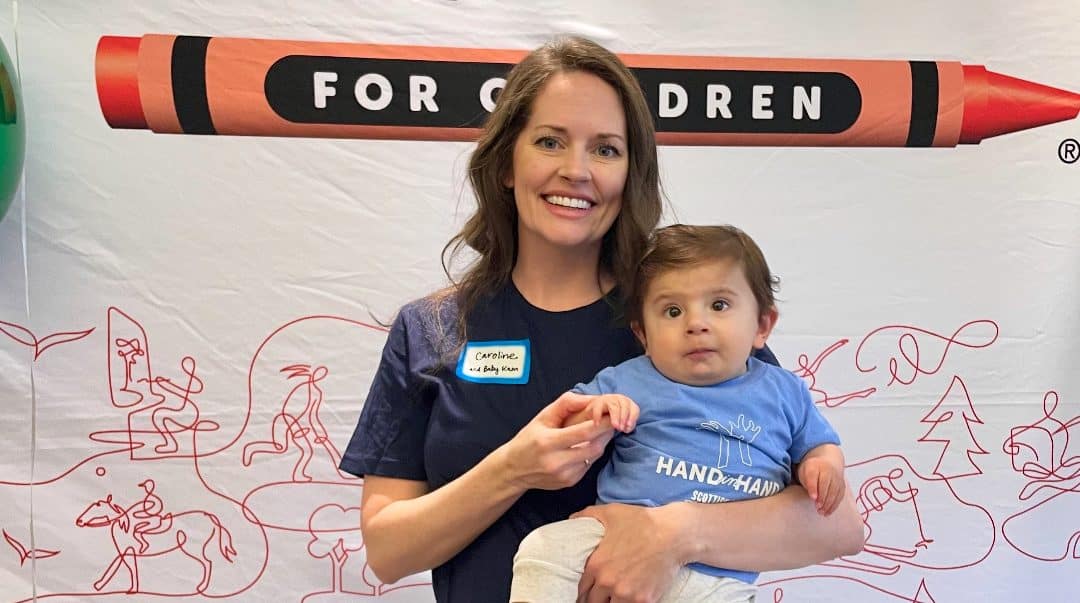
Kamran, better known as “Kam,” is always on the move! Whenever his family takes a break away from the city, Kam enjoys spending time on a swing set or riding up and down hills in golf carts. Though he is full of energy and curiosity, 2-year-old Kam has endured many challenges to be able to enjoy his favorite activities.

When Kam was born, his parents noticed contractions in his hands, which led them to seek solutions at other facilities near their home in Fort Worth, Texas. Kam was diagnosed with congenital contractures of the limbs and face, hypotonia and developmental dysplasia (CLIFADD) syndrome. CLIFADD is a rare, congenital condition that causes various limbs to contract. Kam was also diagnosed with distal arthrogryposis, a symptom of CLIFADD. Distal arthrogryposis affects Kam’s hands, causing them to curve inward, which limits his range of motion.

“We were completely in shock and even fearful when we heard the news,” Caroline says. “We immediately sought as much information as we could find, even though there wasn’t much.”

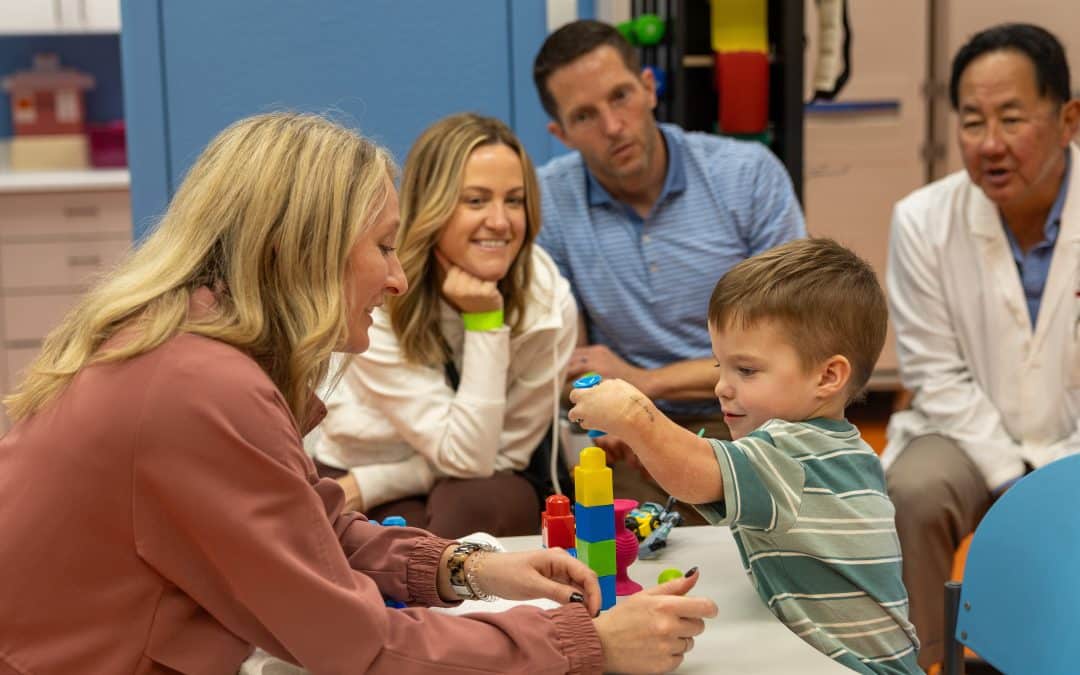
Seeking a second opinion for treatment options, Kam and his family came to Scottish Rite to be evaluated by Director of the Charles E. Seay, Jr. Center for Excellence in Hand Scott Oishi, M.D., FACS, and occupational therapist Amy Sitabkhan. “Within minutes of our appointment, we felt at ease and knew that we had made the right decision to come to Scottish Rite,” Caroline says. “The team was so caring and patient, even taking the time to talk to us as parents and understand our needs better for our son.”

Together, Dr. Oishi and Amy tailored a treatment plan that focuses on improving Kam’s mobility. With demonstrations led by Amy, Kam’s family learned exercises to continue stretching his fingers to advance his progress at home each day. Kam’s family learned proper nighttime bracing technique, which stretches his fingers to improve his range of motion. After a few months, Kam began grasping his toys with his hands.

“We haven’t felt the same care and support from anywhere else since coming to Scottish Rite,” Caroline says. “It’s because Scottish Rite treats Kam like a child first and a patient second. Our family feels so taken care of whenever we are here.”

Kam and his family recently began attending the Hand in Hand Support Group, where they found a sense of community at Scottish Rite. This specialized group connects families of children with hand or upper limb conditions with resources and provides a forum to share their experiences. While Kam’s care journey continues, his family remains committed to progress not only for Kam but also for his older sister. Now, they’re focused on teaching their Kam’s sister daughter the importance of acceptance and understanding of those with different conditions.

“Hand in Hand Support Group has been so special for our family,” Caroline says. “I recognize the importance of connecting with others to share similar experiences, as well as hope. To our family, Scottish Rite has been a light on this unknown path.”

 Do you have a story? We want to hear it! Share your story with us.

Briggs’ Transformer Surgery: The Procedure That Gave Him a Thumb

Briggs’ Transformer Surgery: The Procedure That Gave Him a Thumb

Previously published in Rite Up, 2025 – Issue 1

Just two days after Christmas, 4-year-old Brigham, who goes by Briggs, underwent what he calls his “Transformer” surgery at Scottish Rite for Children. Briggs, of Longview, Texas, loves playing with cars, trucks and Transformers — the Hasbro action figures that start as robots, transform into various vehicles and also star in comic books, animated series and blockbuster films. On surgery day, Briggs arrived dressed as his favorite character, Optimus Prime, a robot-to-18-wheeler Transformer who is the central hero and courageous leader of the Autobots — the good guys.

Briggs’ parents, Rachel and Robert, had an inkling that something might be different when Briggs was born. During an ultrasound, Rachel recalls a doctor saying that something was going on with Briggs’ hand, but he could not see for sure because of the way he was positioned. “It scared me, and I remember leaving there thinking, ‘Is there something wrong with my baby?’” Rachel says.

Months later, Briggs was born early at 33 ½ weeks. “His arm was kind of pinned behind him, and his hand turned in very much toward his forearm,” Robert says. “That was the only thing he could do with that arm.” Rachel explains that within 24 hours, a doctor at the hospital came in and said, “We’re referring you to Scottish Rite because they’re the best.”

After eight weeks in the NICU, the family brought Briggs to Scottish Rite for Children where he was evaluated by pediatric orthopedic surgeon and Director of the Charles E. Seay, Jr. Center for Excellence in Hand Scott Oishi, M.D., FACS. Dr. Oishi diagnosed Briggs with ulnar dimelia, which is classically referred to as mirror hand. Briggs was born with seven fingers on his left hand, but he had no  

thumb. The fingers on one side of his hand mirrored the fingers on the other side. In addition to the hand, ulnar dimelia affects the functionality of the arm. Typically, a baby is born with two bones in their forearm, including the radius on the thumb side and the ulna on the pinky finger side. A child with ulnar dimelia has no radius. Instead, the ulna is duplicated, which affects the ability to bend and rotate the elbow and wrist.

“Ulnar dimelia is one of the rarest congenital disorders of the arm,” Dr. Oishi says. “Many surgeons that do pediatric hand surgery have never seen it in their life.” An article published in the Journal of Musculoskeletal Surgery and Research describes ulnar dimelia as a rare developmental anomaly with only about 70 cases reported worldwide. “At Scottish Rite for Children, we have a vast amount of experience treating conditions that are very rarely seen,” Dr. Oishi says. “And, we have an entire multidisciplinary team of not just surgeons but also child life specialists and occupational therapists, as well as hand camp programs for children with congenital anomalies.”

Dr. Oishi and his clinical team designed an individualized treatment plan for Briggs that they continue to manage as he grows. To date, Briggs has undergone three different surgeries to improve the functionality of his arm and hand. The first one occurred right before his first birthday. Prior to the procedure, his arm was stuck in extension, meaning Briggs could

not bend his elbow. After a complex surgery, Dr. Oishi created a functioning elbow that Briggs could begin to move. “He went from his arm being kind of twisted behind him to having an arm that hangs normally with a slight bend,” Robert says. “It was amazing! I mean, how in the world do you create an elbow for somebody?”

When Briggs was 3, Dr. Oishi performed a second surgery to release soft tissue that took Briggs’ wrist from a locked position into a more flexible one. “When your wrist is curled in, it makes your arm look very short,” Robert says. “That surgery released his wrist, and he was able to have it stretched out more.”

A close-up of 4-year-old Briggs’ left hand with seven fingers.

Briggs’ latest operation — his “Transformer” surgery — is technically called pollicization. He went into surgery with seven fingers and no thumb, and Dr. Oishi transformed his hand into one that now has three fingers and a functioning thumb. The pollicization procedure creates a thumb to give a child the ability to grab objects. This is accomplished by converting one of the fingers into a thumb by moving it down the hand and rotating it into opposition to the other fingers.

Your thumb plays a pivotal role because it comes toward your other fingers to give you true functional grabbing ability,” Robert says. “Briggs never had that. He could grab things by pinching two fingers together, but they were side by side.”

Dr. Oishi explains that a child will usually indicate which finger they want to be their thumb. “The finger has to be what we call supple, so when you push on it, it bends easily,” he says. “Some kids have stiff fingers, and they don’t work well as a thumb.” Over the years during

Briggs’ appointments, Dr. Oishi examined his fingers and also determined his grip pattern. “I have a lot of toys in my pockets,” he says. “People think I’m just playing with the kids, which I am, but I’m actually playing with them with purpose to see which finger they want to use as their thumb, and that’s how we determine which one to move.”

Briggs’ most functional fingers include the four that were originally located on the left side of his hand — the side on which they are supposed to grow. These are his pinky, ring and middle finger. The one located immediately after the middle finger was his best finger, the one that Dr. Oishi made into a thumb. “You’d like to leave him with four fingers and a thumb, but the other three fingers were stiff, and he didn’t use them,” Dr. Oishi says. “My goal is to give him the most aesthetically pleasing and most functional hand.”

Having a functioning thumb is critical to overall hand function. It is better for a child to have three fingers and a thumb than four fingers and no thumb. It is also important for a child to undergo pollicization surgery when they are young so their brain can adapt and functionally integrate the new thumb. “Researchers debate about when the use pattern of plasticity sets in,” Dr. Oishi says, “but usually, you conduct a pollicization before a child turns 4, 5 or 6 so they can incorporate the idea of the thumb into their brain.” When these children get older, they simply think of that finger as their thumb, whereas a child who undergoes pollicization later still thinks of their thumb as the finger that was moved.

When Briggs came out of surgery, he wore a blue cast to match his Optimus Prime outfit. He also got Transformers stickers, which of course, he stuck on his cast. “Briggs has lived a large portion of his life in a cast or with a splint on his arm,” Robert says. “I would be a hot mess of complaining, but it doesn’t faze him. He just doesn’t get down, which is really cool to watch.”

“Briggs is an overcomer,” Rachel says. “He has a spirit of true joy.” She shares that recently, Briggs was pretending to be a doctor. “I was like, ‘Are you being Dr. Oishi?’” Rachel says, “and Briggs was like, ‘Yeah!’”

Dr. Oishi’s hope for Briggs is that he has no pain and can do everything he wants to do without any help. “Briggs is still young, but he’s pretty close to achieving this,” Dr. Oishi says. “He’s got a great support system, and he doesn’t let anything stop him.”

“We have a high level of trust in Dr. Oishi and feel that he’s got Briggs’ best interest in mind,” Robert says. Rachel appreciates his bedside manner. “The trust we have in him is because of how much he genuinely cares,” she says. “You can see how passionate he is about his patients — every single one.”

Get to Know Our Staff: Beth Boomstein, Information Technology

Get to Know Our Staff: Beth Boomstein, Information Technology

What is your job title at Scottish Rite?
I am an enterprise resource planning (ERP) training and testing coordinator. I train the employees on how to use WorkRite and other applications, as well as overseeing Scottish Rite’s release testing throughout the year.

What is the most fulfilling part of your job?
My work helps employees complete their tasks easier and quicker, allowing them to return to providing patient care.

What makes Scottish Rite a special place to you?
It is a combination of the smell of popcorn, how Scottish Rite treats its’ staff with respect and how everyone shares the same goal of helping every patient.

What made you choose a career in health care?
I enjoy working in health care because the end goal is always to improve patient experience. As a child, I grew up in a household with complicated medical issues so I deeply understand how health care professionals can impact patients.

What is something unique you get to do in your position?
I am lucky I get to interact with so many different teams across the organization. Whether I am training a team on how to submit supply chain requisitions or helping a team build content for their annual education materials, I learn a lot. I am curious by nature, so learning about what other people do brings me a lot of joy.

What’s your favorite thing to do outside of work?
I like to explore restaurants with my friends.

Do you have any hidden talents?
I have encyclopedic knowledge of pop culture and television.

Where are you from, and what brought you to DFW?
I grew up in Far North Dallas and went to college at The University of Kansas. After graduation, I returned to Dallas to be closer to my parents and our dog. I have other roots in Michigan and New York.

If you could travel to anywhere in the world, where would you go and why?
I would choose Japan for their food, technology and culture.

If you had to pick one meal to eat for the rest of your life, what would it be?
I would choose a cold Dr. Pepper, dim sum, a slice of pizza from New York City and a saltwater taffy as a dessert. These are all foods that connect me back to my childhood and my family. I hope for this scenario that cavities are nonexistent!

What movie do you think everyone should watch at least once?
“The First Wives Club”

What was the first concert you attended?
I saw Radiohead during their In Rainbows tour.

Favorite DFW hidden gem?
I would pick Café Duro for their coffee and breakfast menu, and Starship Bagel for their bagels.

If you were to have a movie based on your life, which actress/actor would you choose to play your character?
I pick Tina Fey. As a child, I had a fake talk show where my dog was my sidekick. Some of it was modeled after Tina Fey’s Weekend Update on Saturday Night Live.

What is some advice you would give your younger self, OR what’s the best piece of advice you’ve received?
Drink more water, wear sunscreen, and don’t be afraid to ask for help.

News On 6: Tulsa Man Sells Mustang to Support Scottish Rite for Children

News On 6: Tulsa Man Sells Mustang to Support Scottish Rite for Children

More than 50 years ago, Bryan Rowland was a patient at Scottish Rite for Children. Bryan was born with Klippel-Feil syndrome, a rare condition in which his vertebrae were fused together.

“Thankfully, my parents sought treatment through Scottish Rite, and I received corrective surgery as a toddler,” Bryan says. “They changed my life.”

Now, Bryan is giving up his beloved 1969 Ford Mustang to support the place he loves.

“It remains a magical place in my memories, a life-changing factory of fun for kids, in spite of physical challenges,” Bryan says. “Hopefully saying thank you by donating my prized car means more than just the two words.”

You can watch Bryan’s full story here.