Clubfoot is a condition present at birth that causes the foot to turn inward and point downward. It is one of the most common congenital foot conditions, affecting about 1 in 1,000 babies.
Early treatment leads to the best results. At Scottish Rite for Children, we often begin care within the first one to two weeks of life.
Our Approach to Treating Clubfoot
At Scottish Rite, our Foot team treats newborns and infants with the Ponseti method, which is the gold standard for clubfoot treatment worldwide. This gentle, step-by-step approach gradually corrects your baby’s foot through:
- Weekly casting
- Custom bracing to maintain correction
Our focus is preserving flexibility and limiting the need for major surgery whenever possible. If surgery is needed, we will guide you through the safest and most effective options for your child.
We guide families through every stage of care, from casting and bracing to growth monitoring. Our goal is a strong, flexible foot that allows your child to walk, run and play without limitation.
Types of Clubfoot
There are three main types of clubfoot:
- Idiopathic Clubfoot: This is the most common type and occurs in otherwise healthy babies.
- Syndromic Clubfoot: This occurs along with a genetic condition or another medical diagnosis.
- Neuromuscular Clubfoot: It occurs in children with conditions that affect the nerves or muscles.
Our Foot team has experience caring for all types of clubfoot, including more severe forms and any clubfoot that comes back as a child grows.
What Causes Clubfoot?
The exact cause of clubfoot is unknown. It develops during pregnancy because the bones and soft tissues form differently.
Clubfoot is not caused by anything you did during pregnancy. Although genetic differences have been identified, there is no clear pattern of inheritance.
If a prenatal ultrasound shows signs of clubfoot, we offer consultations before delivery to help you prepare for early treatment.
Symptoms of Clubfoot
At birth, you may notice your child’s:
- Foot turns inward and downward
- Foot appears stiff or rigid
- Sole faces sideways or upwards
Clubfoot does not improve on its own and requires treatment.
If your baby has been diagnosed before or at birth, we recommend scheduling an appointment within the first two weeks of life.
Clubfoot Diagnosis at Scottish Rite
Clubfoot is usually diagnosed during prenatal ultrasound or at birth through a physical exam. Imaging tests are rarely needed.
What to Expect at Your First Visit
During your visit, we will:
- Examine your baby’s feet and legs
- Confirm the diagnosis
- Assess the severity of the condition
- Create a phased treatment timeline
- Explain each phase of care
- Answer your questions
Because early treatment leads to the best results, we often begin casting as soon as the diagnosis is confirmed. In many cases, this can happen at the first appointment.
Treatments for Clubfoot
Clubfoot treatment follows a structured, step-by-step approach. Each phase builds on the one before it to achieve lasting correction and reduce the risk of recurrence.
Phase 1: Serial (Ponseti) Casting
We gently stretch and reposition your baby’s foot each week. A cast is applied to hold the correction in place.
- Most babies need four to five casts
- Each cast gradually improves alignment
- This phase usually lasts about four to five weeks
Phase 2: Heel Cord Tenotomy
About 90% of infants need a minor Achilles tendon release to fully correct ankle position.
- Performed in clinic for babies under 3 months
- Uses topical anesthetic
- Followed by a final cast for three weeks
Full correction typically takes about seven weeks.
Phase 3: Bracing
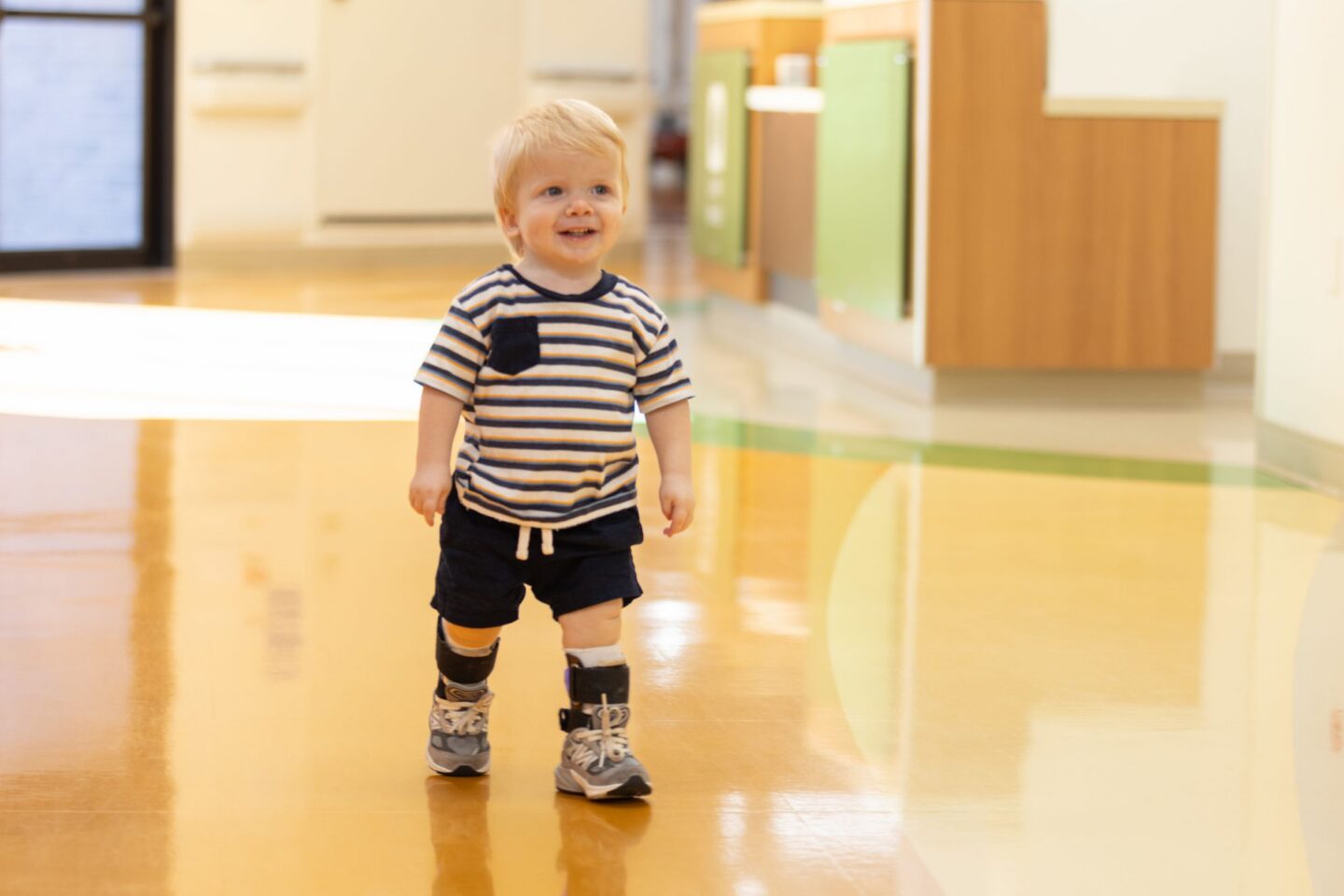
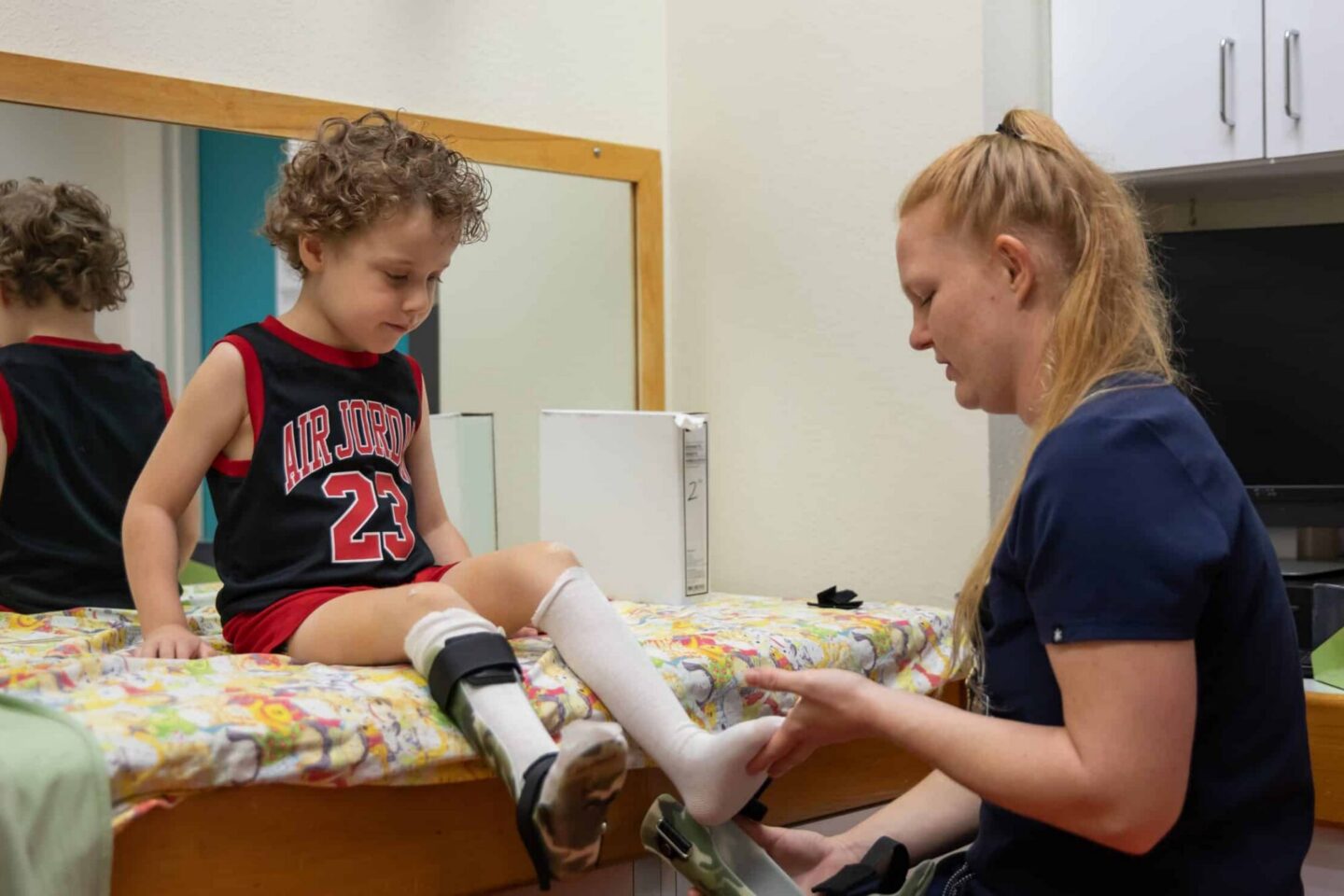
A boot-and-bar brace maintains correction as your child grows.
- Holds the feet turned outward
- Keeps the ankles flexed upward
The brace is worn:
- 23 hours per day until your child begins pulling up to stand
- At night and during naps until age 4
If Recurrence Happens
Even with consistent brace use, some children need additional treatment as they grow. When this happens, it is usually manageable and may include:
- A short period of repeat casting
- A tendon transfer procedure in older children
Our Foot team monitors your child’s growth carefully to address changes early.
Long-Term Outlook
With early treatment and proper bracing, most children grow up with strong flexible feet.
While braces do not delay milestones such as sitting, crawling or walking, the first few weeks of bracing can be an adjustment. Our Foot team provides education and ongoing support to help your family succeed.
Your child can:
- Walk, run and play normally
- Wear regular shoes
- Participate fully in school, sports and other activities
Even after successful treatment, the affected foot or calf may remain slightly smaller. These differences are cosmetic, and do not affect strength or function.
The goal of treatment is simple: a foot that sits flat on the ground and does not limit your child’s life.
Why Choose Us?
Specialized pediatric expertise: Our Foot team focuses exclusively on children and has deep experience treating all types of clubfoot, from newborn diagnoses to recurrence.
Evidence-based, motion-preserving care: We follow internationally recognized Ponseti protocols designed to correct alignment while preserving flexibility and minimizing the need for major surgery.
Guidance beyond the clinic: Successful treatment depends on bracing and follow-up. We provide clear education and ongoing support so you feel confident managing care at home.