Scoliosis causes a curve in your child’s spine during their growth and development. At Scottish Rite, our scoliosis experts treat the curve while supporting your child’s social and emotional well-being throughout care.
Our Approach to Scoliosis
We understand that facing scoliosis can feel overwhelming for kids and their families. Our world-class Spine Care experts will guide you through each step with expertise and compassion.
When you come to Scottish Rite, your child will receive the most advanced scoliosis treatments and care. As world-class scoliosis experts, we incorporate the latest scoliosis research directly into your child’s personalized care plan. This can include:
- Innovative scoliosis bracing
- Scoliosis-specific physical therapy
- Advanced surgical techniques
- Social and emotional support
We also know scoliosis affects how your child feels about themselves and their daily activities. That’s why our care goes beyond the spine.
Your Child’s Care Team
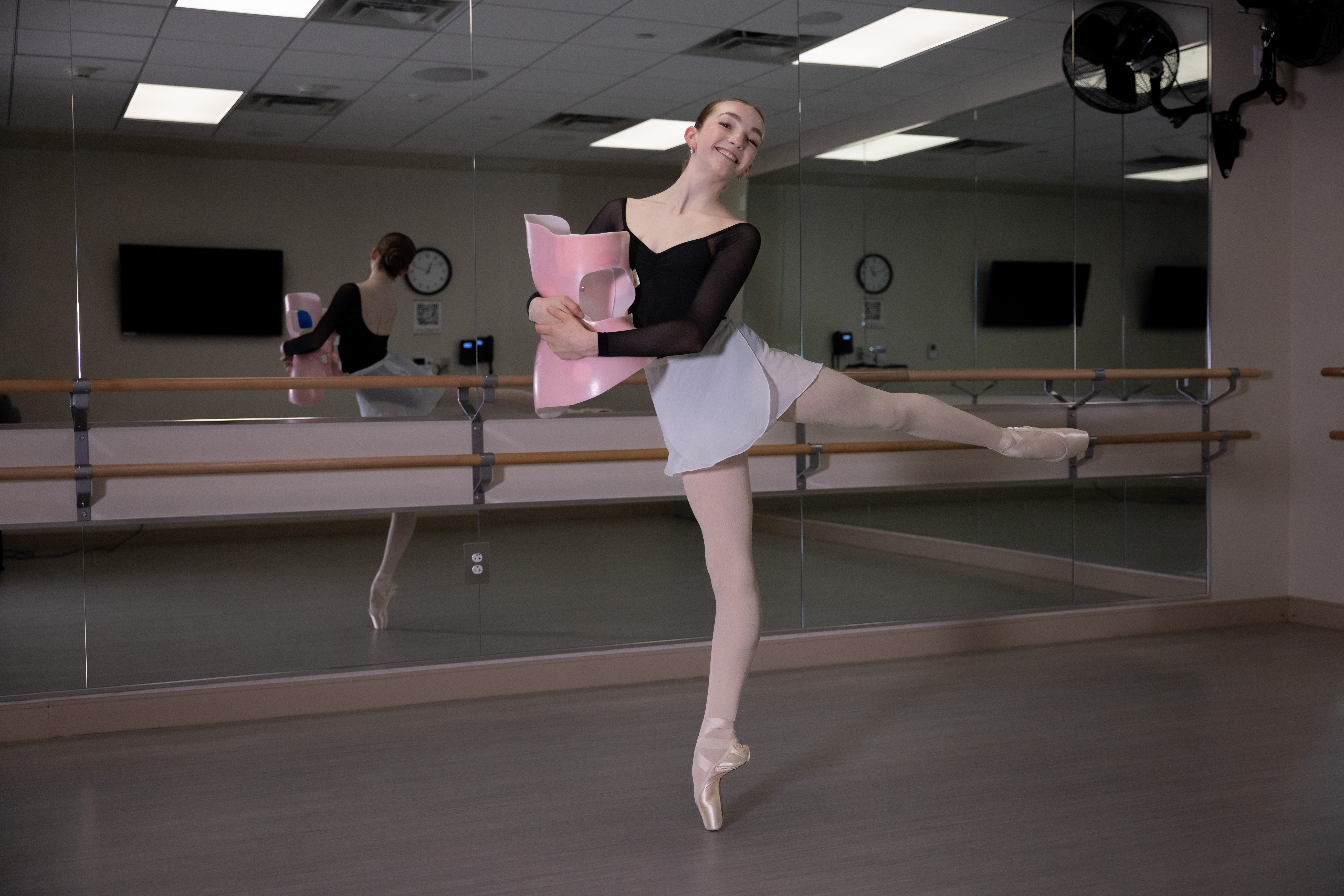
Our team of social workers, psychologists and child life specialists offer emotional and social support. They’ll help your child build confidence, cope with wearing a brace, if necessary, while also remaining active in all they want to do.
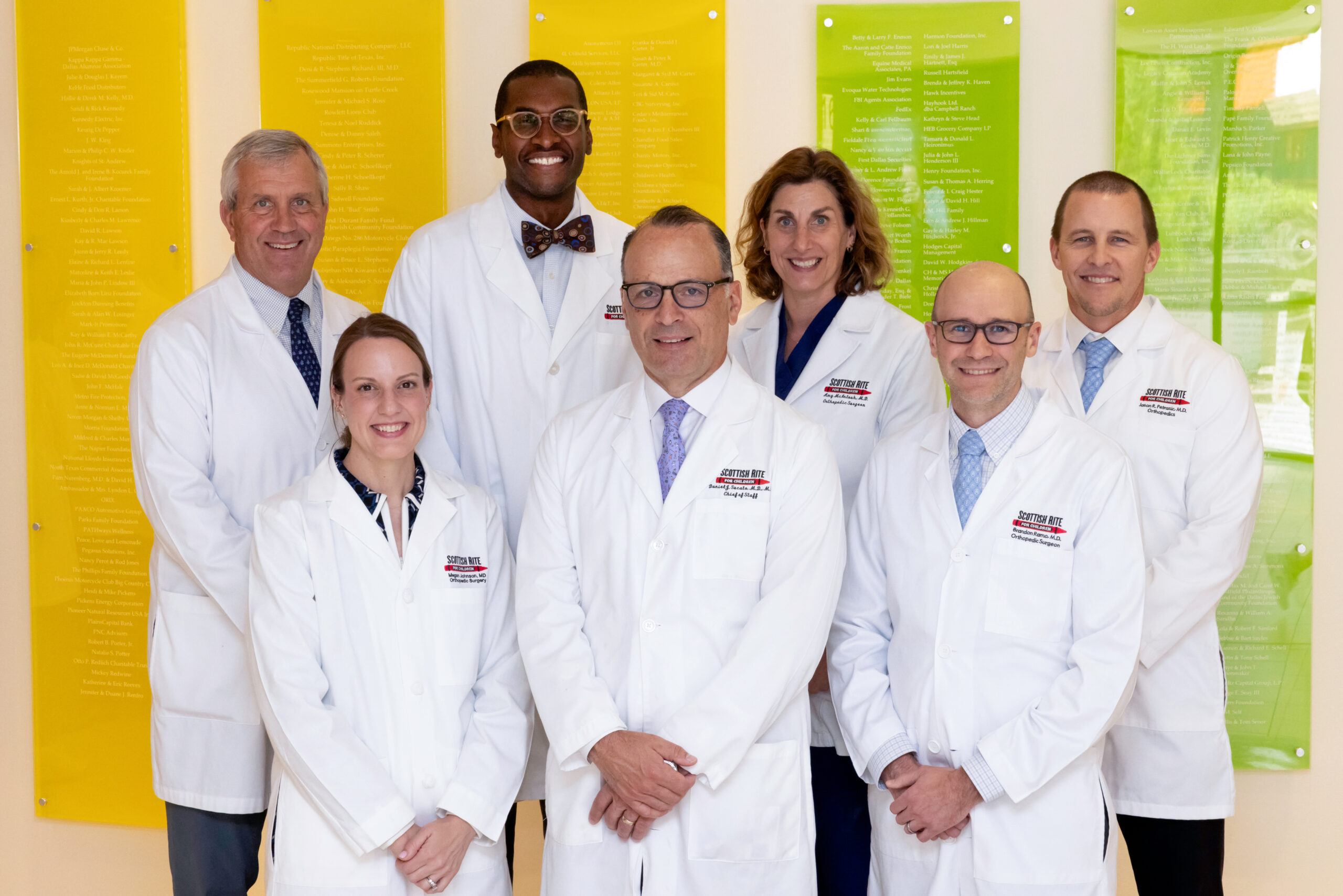
Your child’s care plan is tailored to your child’s specific needs by a dedicated team that may include:
- Pediatric orthopedic surgeons
- Scoliosis bracing specialists
- Physical therapists
- Social workers and child life specialists
Together, they make sure you and your child are supported, informed and empowered throughout treatment.
Types of Scoliosis
There are several types of scoliosis that affect children and teens.
While some kids have scoliosis associated with other medical conditions, others have no other health conditions besides scoliosis.
The different types of scoliosis include:
- Idiopathic scoliosis is the most common type of scoliosis in children ages 10-18, and it has no known cause.
- Congenital scoliosis is a rare form of scoliosis caused by abnormal spine development before birth.
- Early-onset scoliosis develops in children age 8 or younger.
- Neuromuscular and syndromic scoliosis is caused by conditions like cerebral palsy, muscular dystrophy or spina bifida.
What Causes Scoliosis?
In most cases, there is no clear cause of scoliosis — and there’s no way to prevent it. However, clinical researchers at Scottish Rite are currently leading groundbreaking research looking into:
- The causes of scoliosis
- Ways to prevent scoliosis
- How to slow or change its progression
Developing scoliosis is not anyone’s fault. It is not the result of carrying a heavy backpack, poor posture or other habits and behaviors.
Risk Factors of Scoliosis
While the causes are mostly unknown, there are some risk factors that increase your child’s chance of developing scoliosis:
- Family history: Scoliosis runs in families. If you have a family history of scoliosis, your child has a higher risk of developing it.
- Gender: Scoliosis is more common in girls, though boys can also develop it.
- Developmental conditions: Congenital scoliosis occurs during spine development before your child is born.
- Neurological conditions: Kids who have neurological, neuromuscular and genetic conditions have a higher risk of scoliosis.
If your child has any of these risk factors, talk to your pediatrician or a spine expert at Scottish Rite. Our experts can recommend scoliosis screenings and help you watch for early signs.
Symptoms of Scoliosis
Often, signs and symptoms of scoliosis are so subtle that they’re easy to miss.
However, some common symptoms of scoliosis include:
- Uneven shoulders or hips
- One shoulder blade that is more prominent than the other
- Uneven rib cage, with one side higher than the other
Early detection is key with scoliosis. The sooner you catch it, the more treatment options your child will have.
Talk to your doctor if you notice these signs or have other concerns about scoliosis.
Scoliosis Diagnosis
Scoliosis screening starts around age 10. You can also make an appointment for a screening if you notice signs or symptoms of scoliosis.
During your child’s appointment, their provider will perform a scoliosis screening known as the Adam’s forward bend test.
For this test, your child will simply bend forward, while your provider checks their back for signs of scoliosis.
Additional Testing for Scoliosis
Scoliosis can range from mild to severe depending on the size of the curve.
If the provider detects a curve in your child’s spine, they will do additional testing to measure the curve. These tests include:
- Scoliometer measurement: They may use a measurement device called a scoliometer to measure the size of the curve.
- X-ray: An X-ray captures a clear image of your child’s spine, from the back and from the side, showing how large the curve is.
- MRI: In rare cases, your provider may order an MRI if they’re concerned an underlying spinal cord condition is present.
These tests measure your child’s curve in degrees. A straight spine is 0 degrees, and any curve that measures greater than 10 degrees or more is considered scoliosis.
Treatments for Scoliosis
Your child’s scoliosis treatment at Scottish Rite depends on:
- The size of the curve
- Your child’s remaining growth
Smaller curves in children who have little growth left are often observed while larger curves with more remaining growth require treatment. A detailed analysis of these factors and others will be explained to you and your child during your visit.
Your scoliosis expert will work with you and your child to create a treatment plan tailored to your child’s needs and lifestyle.
Observation
If your child’s curve is less than 20 degrees, your care team may recommend observation.
Your child will have X-rays every four to eight months to monitor for changes. If the curve progresses, your team will discuss next steps with you.
Scoliosis Bracing
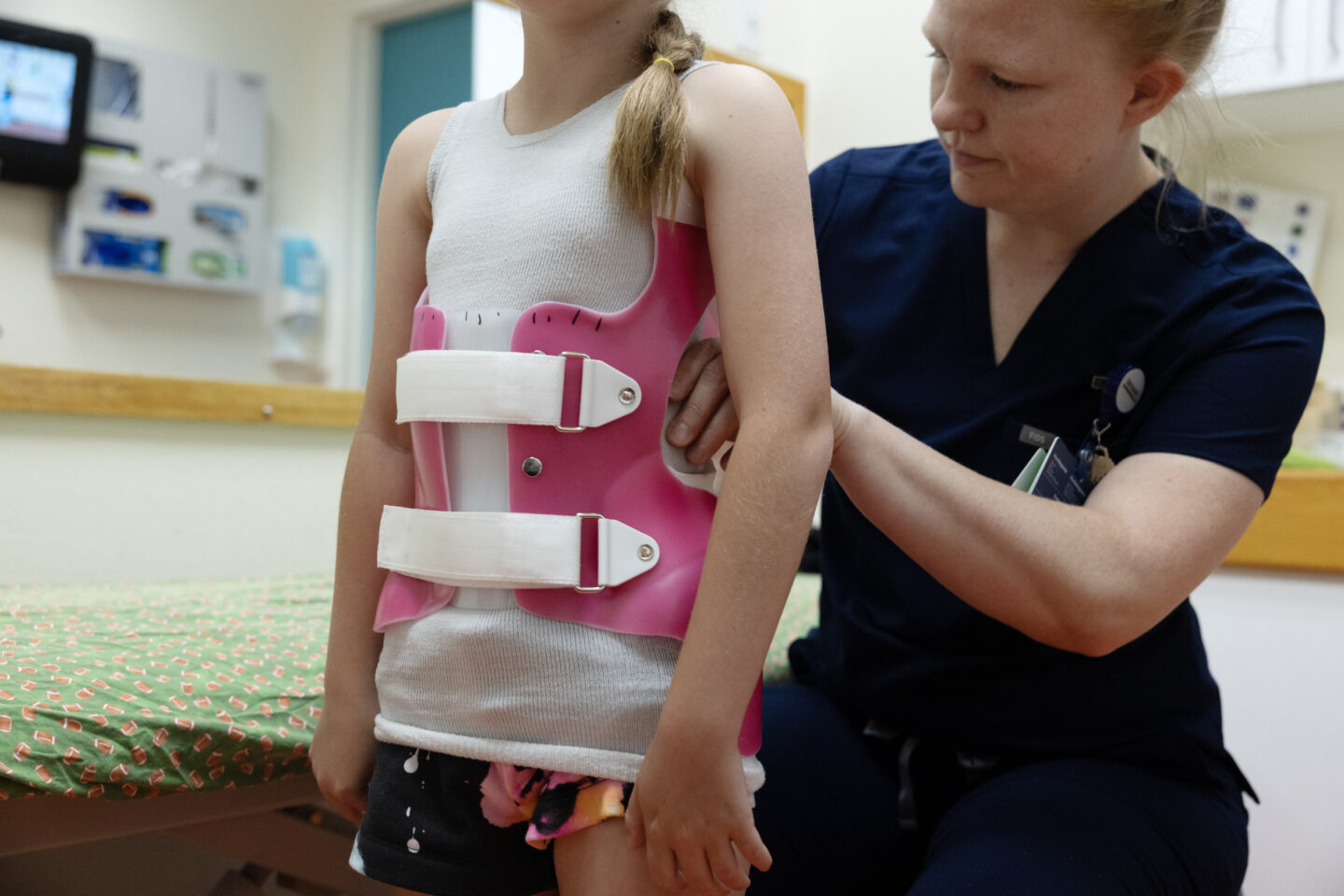
If your child’s curve is between 20 and 45 degrees and they are still growing, they may need to wear a scoliosis brace. The brace helps prevent their curve from worsening.
Your care team will discuss the right type of brace for your child. They’ll guide your child through everything they need to know about wearing the brace.
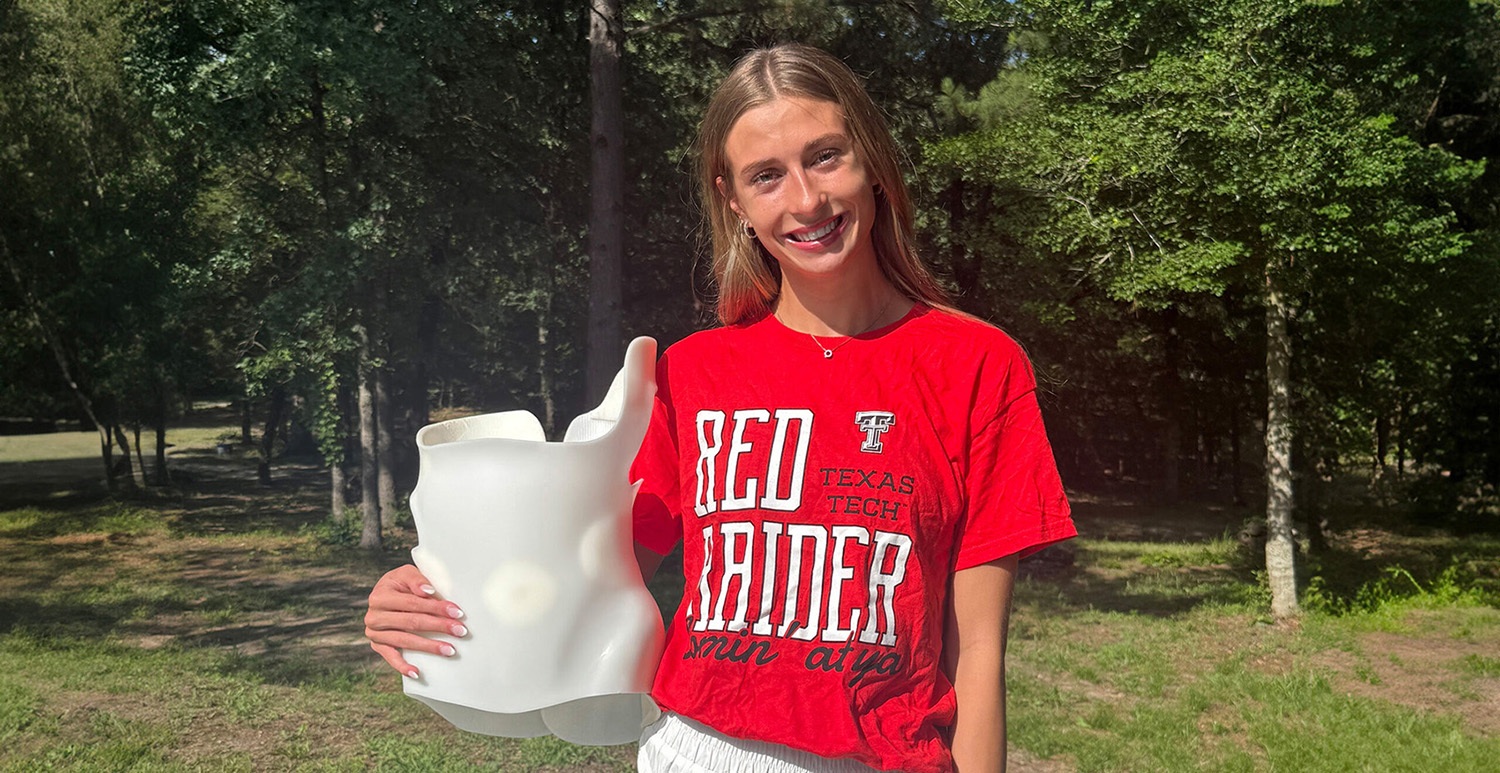
Our team understands the physical, emotional and social challenges of wearing a brace. They’ll work with you and your child to address your concerns and provide support at each step.
Scoliosis Surgery
Your child’s care team will discuss scoliosis surgery if the curve is more severe, over 45 to 50 degrees. The goal of surgery is to prevent the curve from worsening and to improve it.
Scoliosis surgeons at Scottish Rite specialize in the full range of scoliosis surgery options, including:
- Posterior spinal fusion with instrumentation, which is the most common scoliosis surgery to treat the curve.
- Vertebral body tethering, a newer technique that allows for more spinal mobility and flexibility.
Your child’s care team will discuss the risks and benefits of each surgery — and the right option for your child.
Physical Therapy for Scoliosis
Scoliosis-specific physical therapy, known as the Schroth Method for scoliosis, uses customized exercises for treating scoliosis. These exercises are designed to:
- Improve posture
- Support spine alignment
- Strengthen muscles
Your child’s care team may recommend scoliosis-specific therapy on its own or with scoliosis bracing.
Scoliosis Casting
If your child is younger, they may be a candidate for scoliosis casting. This treatment includes a series of casts over several months to slow or stop the curve from worsening.

Why Choose Us?
Customized scoliosis bracing: Our team of scoliosis experts make your child’s scoliosis brace onsite in our Orthotics and Prosthetics lab. Each brace is custom-made, built and fitted specifically for your child.
Peer support for scoliosis: Scottish Rite’s Peer Support program connects kids with others going through scoliosis treatment. The support and camaraderie help kids feel less isolated and self-conscious.
Leaders in scoliosis research: Our clinicians and researchers are seeking new ways to detect, understand and treat scoliosis. And they’re bringing the future of scoliosis care to your child today.
-
Another provider may refer your child to Scottish Rite for scoliosis care. However, a referral is not required to schedule an appointment with us.
We offer appointments at our Scottish Rite locations in Dallas and Frisco. To make an appointment, use our online form or call us at:
- 214-559-7400 (Dallas location)
- 214-559-8670 (Frisco location)
-
Please bring previous imaging and/or medical records that are relevant to your child’s spine and back health.
-
Scoliosis and spinal care experts at our Sarah M. and Charles E. Seay/Martha and Pat Beard Center for Excellence in Spine Research are working to:
- Detect symptoms earlier
- Determine the cause of idiopathic scoliosis
- Identify risk factors
- Improve treatment options
- Prevent progression of scoliosis
Our Center for Excellence in Spine Research is also home to the Pediatric Scoliosis Database and Genetic Scoliosis Database. This database is crucial to informing and strengthening research to improve the care and lives of young people living with scoliosis.