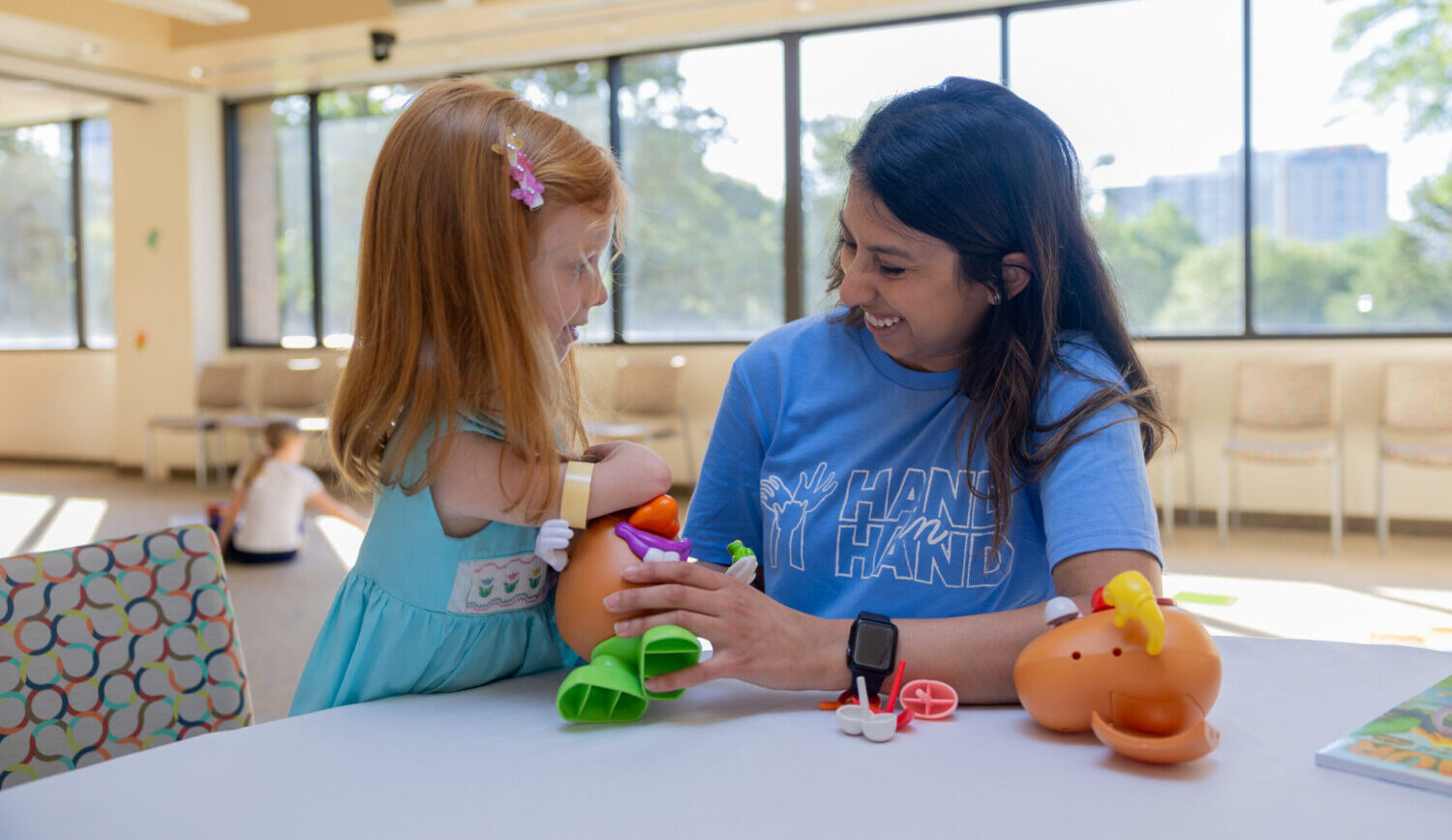
Occupational therapy teaches your child strategies and practical ways to perform daily activities at home, school and play. This can include learning how to eat independently, holding a pencil, getting dressed or tying their shoes.
Our Approach to Occupational Therapy
If your child struggles with daily activities, occupational therapy can help. We help your child build the skills needed to achieve independence and function at home and school.
Through personalized evaluations, we take time to understand your child’s unique needs. We then develop tailored plans to improve daily activities like grooming, dressing and preparing for school or work.
Building these skills helps your child fully participate in the activities they love. It also prepares them for a more independent future.
Personalized Therapy Goals
Most occupational therapy at Scottish Rite is short-term and goal-based. Your child’s occupational therapy plan may focus on goals such as:
- Improved ability to safely and independently complete daily tasks
- Increased participation in activities at home, school and play
- New skills and strengths
- Reduced reliance on others for everyday care
- Increased confidence and independence
Comprehensive Occupational Therapy Services
At Scottish Rite, we offer:
- Outpatient occupational therapy that includes short-term episodic care centered on a child’s specific, achievable goals.
- Inpatient occupational therapy that can help your child prepare for and recover from surgery.
Our occupational therapists also work within all clinical settings at Scottish Rite. We help assess for your child’s:
- Therapy needs
- Surgical planning
- Equipment needs
- Specific provider-requested evaluations
Types of Occupational Therapy
Orthopedic Occupational Therapy
Our therapists have expertise in pediatric care and orthopedic conditions. We provide the most up-to-date and evidence-based approaches to help your child gain the skills they need.
We can also help you and your child explore adaptive devices, equipment and techniques that may help your child achieve their maximum potential.
Hand Therapy
Our certified hand therapists can help your child after injuries or conditions related to their hand, wrist, elbow or shoulder. Therapy may include custom splints, casting techniques or other specialized treatments to improve hand movement and function.
Many of our therapists hold the Certified Hand Therapist (CHT) credential, demonstrating advanced training in hand and upper extremity care. We combine our specialty of hand-specific training with expertise in pediatric care to meet each child’s unique needs. We aim to provide the highest level of function and performance to help your child return to activities.
Inpatient Occupational Therapy
Your child may do occupational therapy in our inpatient rehabilitation units if they have a neurological, musculoskeletal or orthopedic condition.
Our expert team will also prepare, educate and train your child before and after surgery depending on their needs. Research shows that this type of activity supports a child’s recovery process after surgery.
They’ll also coordinate closely with your child’s physical therapists. These therapies will help you all understand the activities, exercises and equipment needed for a safe home recovery.
Not all children who have surgery need inpatient occupational therapy. Your child’s surgical and medical teams will discuss this with you before and/or after your child’s surgery
Mobility and Equipment Therapy
We provide support for kids who have custom seating systems, wheelchairs and other assistive devices.
Our Mobility and Equipment team assesses your child’s skill level, functional needs, home and school environment and family dynamics. Equipment evaluations may include wheelchairs, walkers, standers or other mobility devices. Based on this evaluation, we recommend equipment that helps your child move safely and participate more fully in daily activities.
Benefits of Occupational Therapy
Occupational therapy can help improve your child’s:
- Fine motor skills
- Gross motor skills
- Mobility
- Flexibility
- Range of motion
- Comfort
- Age-appropriate skills
- Recovery after injury or surgery
- Complications from congenital conditions like cerebral palsy and spina bifida
Occupational therapy can also increase their confidence and sense of control over their life and body.
What to Expect During Occupational Therapy
Depending on the type of occupational therapy your child needs, outpatient occupational therapy typically starts with a 90-minute evaluation.
During this visit, the occupational therapist will observe and assess how your child completes tasks through play and everyday activities.
Depending on your child’s specific needs, you may want to bring:
- Clothing, dishes or items your child struggles to manage
- Photos or videos of your home environment
- Adaptive equipment your child already uses
You will also talk through:
- Daily routines and lifestyle
- Your child’s abilities, challenges and needs
- Therapy goals
- Questions about your child’s condition, therapy and what to expect
We’ll take the time to explain your child’s plan and ways to support their progress at home. Our goal is for you and your child to fully understand what to expect throughout therapy.
After the evaluation, you’ll schedule follow-up therapy sessions with the occupational therapist. Your therapist will discuss visit frequency and how long they expect treatment to be. Visit frequency depends on your child’s needs and the goals you set together during the evaluation.
Why Choose Us
Integrated care: Our occupational therapists work within specialty clinics, including neuromuscular, rheumatology and developmental disability programs. We also work closely with experts in social work, child life, and psychology to ensure that your child has a coordinated, comprehensive care plan.
Family-centered care: We see your family as an essential partner in therapy. You’ll regularly discuss goals, concerns, progress and priorities with your child’s therapist. They’ll help you learn to support your child at home, without impacting their independence.
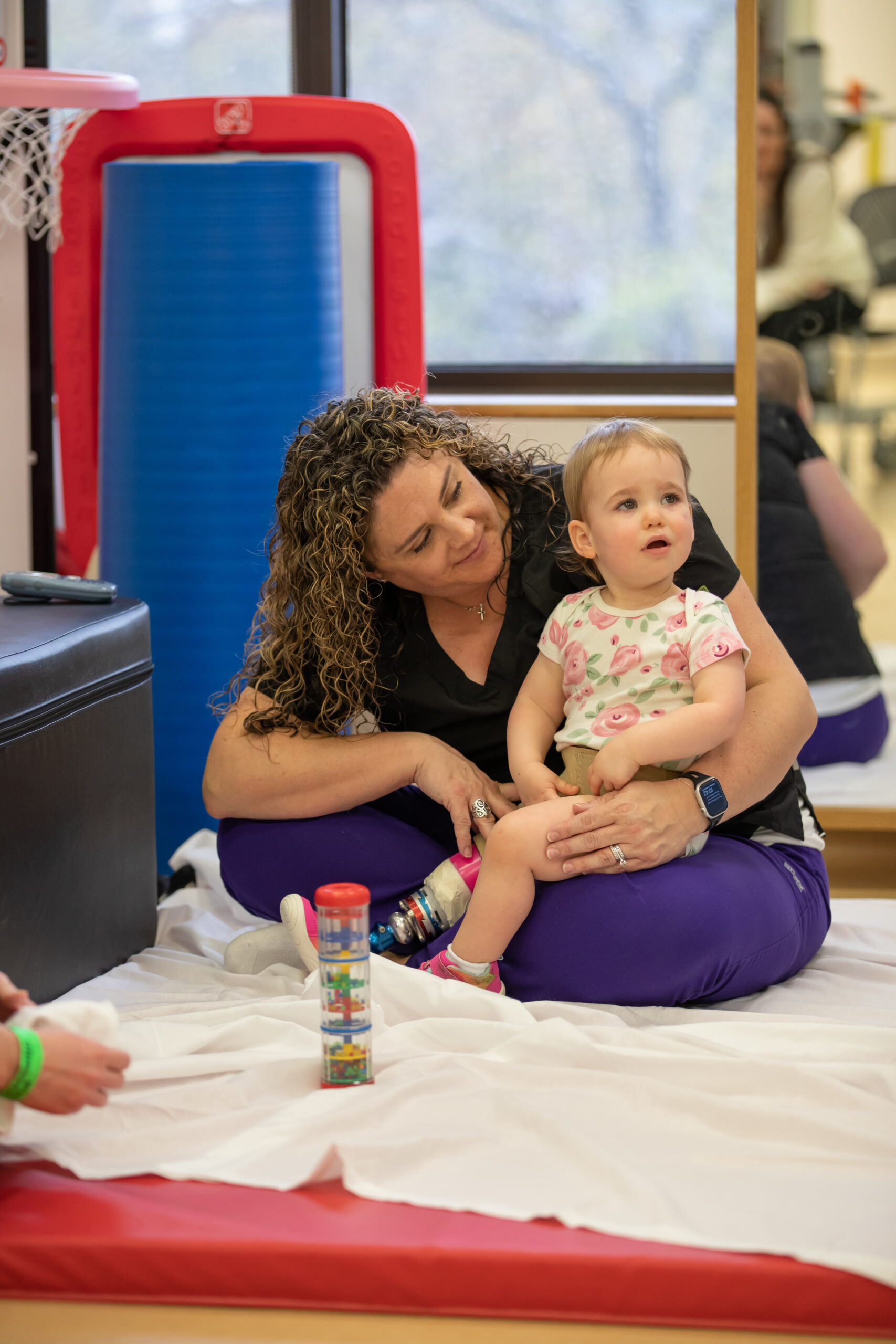
Kid-focused care: We treat kids of all ages, from birth to age 18. Our therapy sessions incorporate age-appropriate games, toys, tools and activities that keep kids engaged and motivated.
-
At this time, only current Scottish Rite patients are eligible for occupational therapy at our clinics. Your child’s primary Scottish Rite provider must first provide your child with a referral for occupational therapy.
Once our Occupational Therapy team receives the referral, we will contact you directly, typically within one to three days. We review your child’s health history to match them with the best therapist for their needs.
We will then schedule your child’s initial evaluation.
-
Through MyChart, you can see your child’s schedule, use the secure chat tool to ask their team questions and attend telehealth visits.
Our patient access team can help you set up your child’s MyChart account if they don’t have one already.
-
It varies. Some kids need only a few visits to address specific challenges. Others may require a longer course of therapy if they are recovering from major surgery or have a more complicated condition.
Your child’s occupational therapist will discuss the anticipated length of your child’s treatment.
-
We offer occupational therapy services at Scottish Rite’s Dallas and Frisco locations.
At our Dallas location, we offer:
- Inpatient occupational therapy
- Orthopedic occupational therapy
- Hand therapy
- Mobility and equipment clinic
At our Frisco location, we offer:
- Orthopedic occupational therapy
- Hand therapy
-
Our occupational therapists treat children from birth to age 18.
-
It varies. Some children come in one or two days a week. Others who are receiving inpatient occupational therapy may see occupational therapists more often.
Your child’s therapist will discuss the frequency of your child’s therapy sessions at their initial evaluation.
-
Yes. We offer occupational therapy appointments before and after school.
However, we do schedule initial evaluations during school hours. This allows us to hold our after-school time slots for therapy sessions.
-
Make sure your child is wearing comfortable clothing they can move in.
If your child is struggling with specific types of clothing, bring those to the initial evaluation. This allows us to determine ways that address the challenge to help.